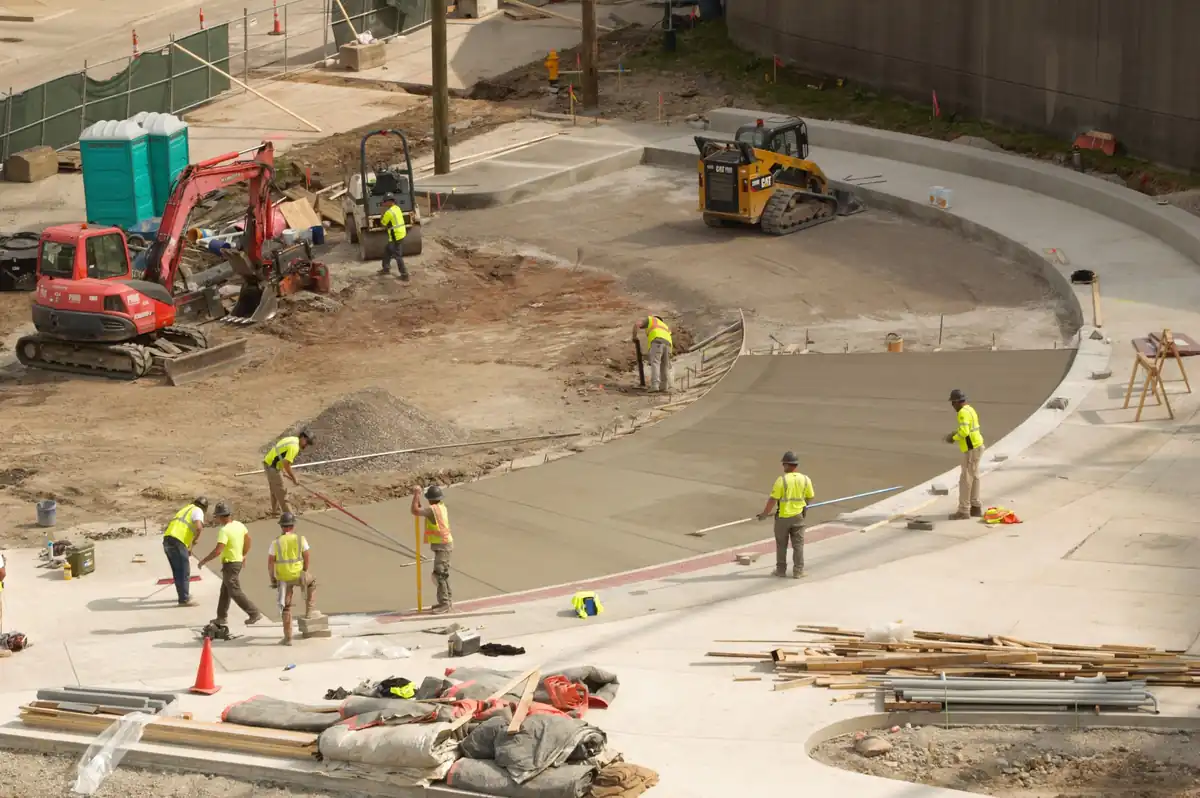
Commercial Concrete Flatwork Near Me in Pflugerville
Flatwork for businesses and property managers between the building and the street, scheduled in phases so customers can still get in the door.
Stock photo
Book a Commercial Site Walk
Request a Commercial Concrete Walk
Tell us what you want built or fixed and roughly where. We reply to set a time to walk the site. Rather talk? Call (737) 201-0849.
Tell us the property, what needs replacing or adding, and any hours the site can’t be disturbed. A site plan or a marked-up aerial photo helps if you have one.
- We walk the site with the manager and mark the phases.
- We flag every piece that sits in city or TxDOT right-of-way.
- The scope separates each area, so it can be approved in parts.
Commercial Concrete Contractors Between the Building and the Street
The flatwork a property needs between the building and the street.
Walks and Storefront Flatwork
Replacing cracked or lifted panels in front of the doors, doweled at every joint so trip lips don’t come back.
Accessible Ramps
Curb ramps and landings built to the slopes in the plans and checked with a level before the forms come off.
Dumpster and Equipment Pads
Thick, reinforced pads with an apron where the truck’s front wheels land, so the pad isn’t the next repair.
Driveway Approaches
New or widened entrances from the street, built as the city’s non-residential Type II approach with the right-of-way permit in hand.
Lot and Drive Lane Repairs
Failed panels cut out and replaced, with the base corrected underneath so the new panel doesn’t settle like the old one.
Small Building Slabs
Slabs for storage buildings, canopies and equipment enclosures, poured to the engineer’s plan.
Choosing a Commercial Concrete Company That Can Work the Right-of-Way
Commercial jobs in Pflugerville often touch city or state right-of-way. Flip the switches that match your site to see who has a say.
Switchboard: who has a say in your site
Turn on every condition your site has. The card on the right collects the agencies and the paperwork as you go.
-
City of Pflugerville Development Engineering A right-of-way permit before work (Ch. 96), typically decided within ten days of a complete application, plus 48 hours’ notice and 3 ft x 3 ft signs on site.
-
City Engineer After-hours right-of-way work needs City Engineer approval and 72 hours’ notice (§96.19).
-
City of Pflugerville Development Engineering A ramp at each sidewalk and street intersection (§150.23(D)), and a 2% cross slope where a drive crosses the walk (UDC §10.2.1).
-
City of Pflugerville Development Engineering A Type II approach for non-residential use (UDC §10.2.1), with the city’s spacing from corners and curb inlets.
-
TxDOT TxDOT approval for concrete work in its right-of-way (UDC §10.3.1(B)), on TxDOT’s schedule.
-
Texas 811 Locate notice at least two business days ahead; private site lines (irrigation, lighting) marked by the owner’s locator.
-
Property manager and tenants A phasing plan: which entrance, walk or parking row closes when, and the marked route around it.
Site routing card
Who's involved
- Elite Concrete Pflugerville (site walk and written scope)
Have ready
- Flip a switch to see what your project adds.
Commercial Concrete Services Around an Open Business
A storefront in Stone Hill Town Center can’t close for a week while its walk is replaced, and a medical office can’t lose its accessible entrance for a day without an alternative. So commercial flatwork is planned in phases: one entrance or one row at a time, with a route marked around the work and the pour timed for the quietest hours the property allows.
Summer adds another constraint. With normal highs at 90°F or above from late May to late September, big pours start at first light, deliveries are spaced to keep the finishers ahead, and curing compound goes on as soon as the surface is ready.
Residential work runs on the same standards; see the concrete contractor in Pflugerville overview for the full list of what we pour.
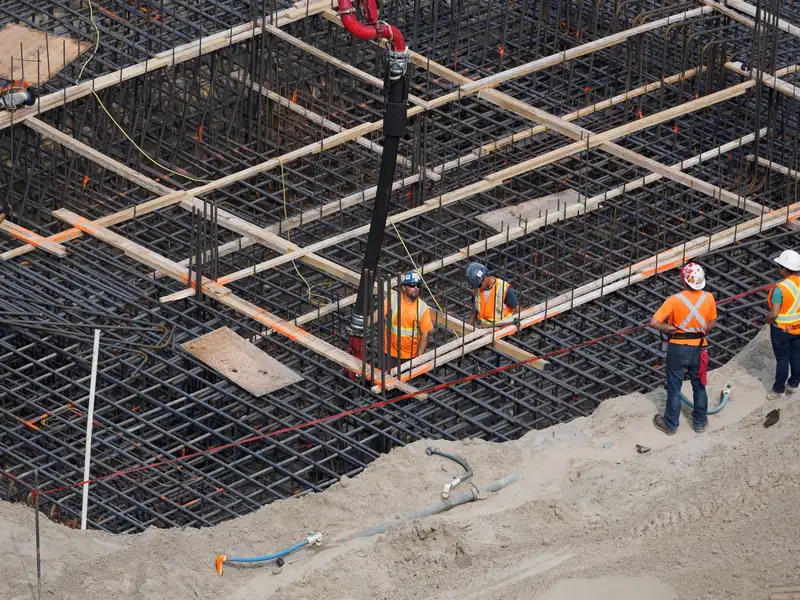
Set-Down Test: who uses this concrete?
Pick what uses each area, then press and hold the button (or tap it) to set the load down. The panel says what a bid should name for that area.
Shoppers and carts: Light, spread-out loads, but every day. The storefront walk needs doweled joints (§150.28) so panels stay level and no trip lips come back.
- Shoppers and carts: Light, spread-out loads, but every day. The storefront walk needs doweled joints (§150.28) so panels stay level and no trip lips come back.
- Cars in the stalls: Wheel loads that stop in the same places. Ask each bidder to price the same thickness and base so the bids compare.
- Delivery truck: Heavier wheels on the drive lane and at the loading area. Those areas get their own thickness and steel in the bid, separate from the parking rows.
- Trash truck at the dumpster: The heaviest, most concentrated load on most small lots, landing at the pad’s front edge. A thick, reinforced pad with an apron where the truck’s front wheels land, so the pad isn’t the next repair.
An illustration, not an engineering check: the sag is exaggerated. Each area’s section comes from the plans or the written bid.
What Concrete Commercial Contractors Owe the Accessible Route
A ramp that is a little too steep or a walk that tilts too far toward the lot fails its users every day. Check the numbers yourself.
Cross-Slope Level: ramps and walks on a commercial site
Tilt the level with the buttons or the arrow keys, or jump to a limit. The list shows which limits a surface at that grade still meets.
8.3% to start. Tilt it to compare.
- Cross slope on the accessible route and where drive aisles cross it: 2% at most.
- Running slope on a curb ramp: 8.3% at most under TxDOT Item 531.
- Side flares on a curb ramp: 10% at most.
- Entrance drives in Pflugerville: 14% at most (UDC §10.2.1).
Slope is rise over run; the drawing exaggerates the tilt.
Sidewalk panels at a business follow the same city rules as a home’s: dowels at the joints (§150.28) and sand bedding in the right-of-way. The sidewalk page covers those in detail, and new slabs and pads follow the same base and curing practice.
Commercial Concrete Flatwork Cost: What a Bid Should Separate
A useful commercial bid breaks the work into areas, so you can approve the entrance now and the back lot next year. Within each area, the movers are saw-cutting and removal, base correction, thickness and steel for the loads, ramps and landings, traffic control and phasing, after-hours premiums if the city or the tenants require them, and the right-of-way permit.
Ask every bidder to price the same areas and the same thickness. If one bid is much lower, check whether it left out the base, the dowels or the phasing.
Commercial Flatwork Questions Before the Barricades Go Up
Usually, if the work is phased. We split the job so one entrance, one row of parking or one stretch of walk is closed at a time, with a marked route around it. The phasing plan is part of the scope, so tenants and customers know what is closed and when.
Only with approval. City Code §96.19 keeps non-emergency right-of-way work to normal business hours and off holidays; after-hours work needs the City Engineer’s approval and 72 hours’ notice. Work entirely on private property follows the property’s own rules and any lease terms.
The loads decide it: a loaded refuse truck on its front wheels is a very different load from cars. For comparison, TxDOT specifies 3,000 psi Class A concrete for curbs, sidewalks and driveways and a higher-strength Class P mix for pavement. The scope names the strength, thickness and steel for your pad.
We apply for it as part of the job when the work is in the right-of-way, but the costs belong to the owner: Pflugerville’s UDC says the owner does and pays for all work on access driveways in the right-of-way. Expect a decision about ten days after the city has a complete application.
Yes, to the slopes in the city’s details and the project’s plans: sidewalk cross slope no more than 2%, curb ramps no steeper than 8.3%, flares no steeper than 10%. Whether a site’s whole accessible route complies is a design question for the owner’s architect or engineer; we build what they specify and check it with a level.
No. Tilt-wall buildings, elevated decks and structural frames are a different trade. Our commercial work is flatwork: walks, ramps, pads, approaches, curbs and lot repairs, with slabs for small buildings poured to an engineer’s plan.
More Concrete Work for Commercial Sites
Ready to Walk the Site With Us?
Send the address, the areas that need work and any blackout hours. We’ll walk it and send a phased scope in writing.
(737) 201-0849 Book a Site Walk