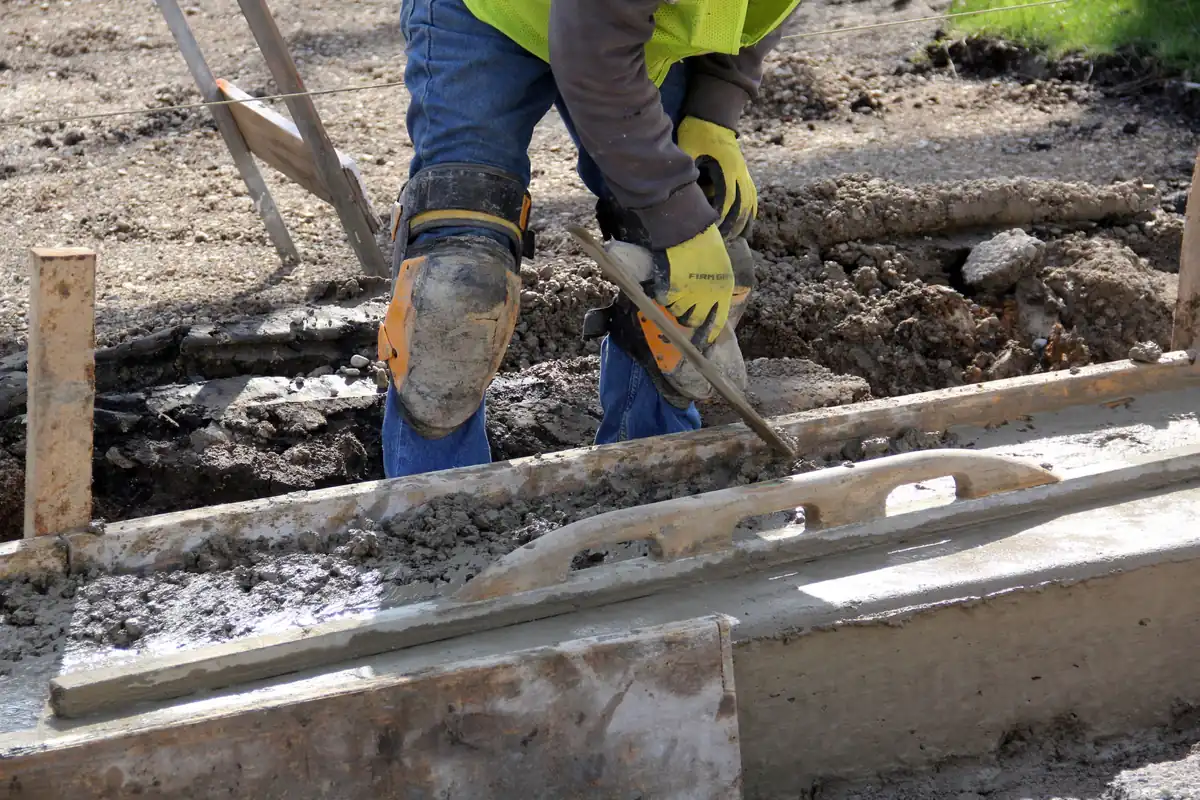
Stamped Concrete Overlay & Resurfacing in Pflugerville
A new wearing surface or a stamped overlay on concrete that is sound underneath. We chain-sound the slab first, and when it isn’t sound, we say so.
Stock photo
Book a Resurfacing Site Visit
Request a Concrete Site Visit
Tell us what you want built or fixed and roughly where. We reply to set a time to walk the site. Rather talk? Call (737) 201-0849.
Resurfacing works on worn, stained, scaled or dated concrete that is still solid. Tell us what the surface looks like and how old it is; photos of the worst spots help.
- We drag a chain across the slab to find hollow spots.
- We check cracks, joints and the fall before offering an overlay.
- If tear-out is the honest answer, you hear it on the walk.
Concrete Overlay Contractors Start by Sounding the Slab
An overlay is only as good as the concrete it bonds to. Drag the chain across this sample slab and listen for the difference.
Hollow Sounder: chain-drag a sample slab
Drag across the squares (or tap them, or use “Drag the chain one row”). Clear ring: bonded. Dull thud: delaminated. Sound plays unless muted.
0 of 50 spots sounded. Before an overlay, every square should ring.
In this sample, a patch about a fifth of the slab, right of center, sounds hollow; the rest rings clear.
What it means: A patch that size is saw-cut out and replaced with full-depth concrete before anything goes on top. Covered over, it would crack through the new surface within a season or two.
Concrete Resurfacing for a Driveway: When It Works and When It Won’t
It works on a drive that is structurally fine but tired: surface scaling, a patchwork of stains, a worn broom texture, or an old color you are done with. With the surface prepared and the joints kept, a resurfacer gives it a new face without the tear-out.
It won’t work on a drive that has settled at the joints, heaved over a root, cracked through in several places, or sounds hollow across large areas. Those are base and slab problems, and a thin skin can’t bridge them. A sound drive with one or two bad panels is often best served by replacing those panels, then resurfacing the whole drive so it matches.
If replacement is the answer, the driveway page covers how a new one is built on Pflugerville clay.
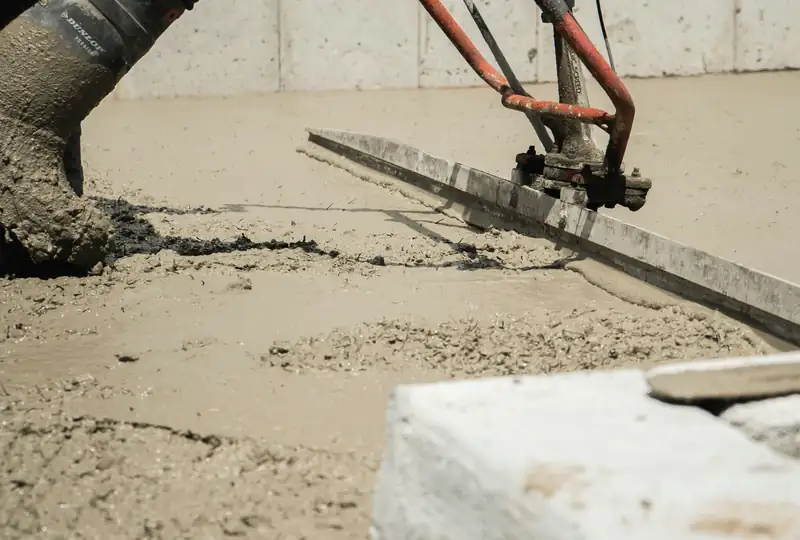
Overlay Textures, From a Broom Coat to a Stamped Overlay
Resurfacers come in several finishes. Each one trades traction, heat and upkeep differently.
Specimen Tray: overlay finishes
Tap a finish to zoom in and read how it behaves underfoot, in the sun and over the years.
-
A thin cement-based coat finished with a broom to match plain concrete.
- Underfoot
- Fine ridges, good traction on drives and walks.
- In the sun
- Gray, nothing to fade.
- Upkeep
- Penetrating sealer optional.
-
Sprayed in splatters, then flattened with a trowel for a soft, mottled look.
- Underfoot
- Cool and grippy; popular on pool decks.
- In the sun
- Light colors stay cooler than dark ones.
- Upkeep
- Reseal when the color looks chalky.
-
A thicker overlay that takes a stamp, for a slate or stone look on an old patio.
- Underfoot
- Textured like stamped concrete.
- In the sun
- Colors fade in UV without a sealer.
- Upkeep
- Reseal every 2 to 3 years in full sun (ASCC).
-
A smooth, troweled finish, more common indoors and under covers.
- Underfoot
- Slick when wet unless the sealer has grit.
- In the sun
- Best kept under a cover.
- Upkeep
- Sealer protects against stains.
Texture drawings are illustrations, not product samples.
What Concrete Resurfacing Companies Should Put in Writing
- The sounding result. Where the slab rang clear, where it didn’t, and what happens to the hollow areas.
- Surface prep. How sealer, paint and weak paste come off, and the profile the product needs to bond.
- Crack and joint plan. Which cracks are treated, and that joints are carried through, not buried.
- The product and finish. What goes on, how thick, what texture and what color.
- Sealer and upkeep. What seals it and how often it needs resealing in sun.
- The limits. In plain words: what the overlay won’t fix, such as settlement or a patio that falls toward the house.
If a bid for resurfacing doesn’t mention sounding or prep, ask why. Those two lines are where most overlay failures start.
Knock-On Chain: how your slab’s condition moves the overlay scope
Describe your slab one link at a time: how it sounded, its surface, cracks, the finish you want and which way it drains. Anything a choice changes elsewhere is highlighted.
-
Chain sounding
Bonded concrete all the way across.
A delaminated area in an otherwise sound slab.
The slab has let go of itself over large areas.
- Cracks and joints: Settled or heaved Settlement is a base problem, not a surface one; those panels are replaced first.
-
Surface today
Scaling, stains or a tired broom texture on sound concrete.
A film the overlay can’t bond to.
- Chain sounding: Small hollow patch The hollow area is saw-cut out and replaced full depth before any prep for the overlay.
- Surface today: Old sealer or paint It comes off by grinding or blasting to the profile the product needs. Expect a separate prep line.
-
Cracks and joints
Stable cracks that are treated before the overlay.
Panels have dropped or lifted at the joints.
-
Finish
Matches plain concrete; good traction on drives and walks.
Sprayed and flattened; cool and grippy around pools.
A thicker coat that takes a stamp.
- Chain sounding: Rings clear Every finish on the tray is open to you.
- Chain sounding: Small hollow patch New and old concrete look different; the overlay is what makes them match.
- Chain sounding: Hollow across most of it Stop here: a thin skin can’t bridge it. This is tear-out and a new pour, and we’ll say so.
- Surface today: Bare and worn The kind of slab a resurfacer is made for.
- Cracks and joints: Hairline, not moving Joints are carried through the overlay, not buried, so it cracks where the slab already does.
- Cracks and joints: Settled or heaved An overlay over moving panels cracks through within a season or two.
- Drainage: Falls away from the house Resurfacing keeps that fall; it doesn’t change it.
- Drainage: Falls toward the house An overlay can’t fix the slope. The slab is removed and re-poured with the right fall.
-
Drainage
Water leaves the slab the right way.
Water runs back to the foundation.
- Finish: Broom coat Gray, nothing to fade; a penetrating sealer is optional.
- Finish: Knockdown Reseal when the color starts to look chalky.
- Finish: Stamped overlay Colors fade in UV without a sealer; reseal every two to three years in full sun (ASCC).
Pick an option in any link to see what it pulls along.
Concrete Resurfacing Contractors or Tear-Out: Where the Line Sits
The honest test is simple. If the slab rings clear under a chain, its cracks aren’t moving, and it drains the right way, resurfacing is usually the better value. If large areas sound hollow, panels have dropped or lifted, or water runs toward the house, tear-out and a new pour costs more once and less over time.
Between the two sits targeted repair: cutting out the hollow or broken panels, replacing them full depth, and then resurfacing so the old and new match. On a patio that already falls the right way, that combination often saves the slab.
We would rather lose an overlay job than sell one that fails. That is part of working as a concrete contractor in Pflugerville, where the next job comes from the neighbors.
Concrete Resurfacing Cost Compared With Replacement
Resurfacing skips the most expensive parts of replacement: breaking out the old slab, hauling it, and building a new base. What you pay for is prep (grinding or blasting, crack treatment, any panel replacement), the product, the finish and texture, and the sealer.
The cost swings with how much prep the slab needs. A clean, sound patio is mostly product and labor; a drive with old sealer and two bad panels is mostly prep. Both show up as separate lines in the written scope.
Concrete Resurfacing Questions
Moving cracks will. An overlay is a thin skin bonded to the old slab, so if the slab underneath keeps moving at a crack or a joint, the overlay cracks there too. Stable hairline cracks are treated and covered; joints are carried up through the overlay instead of being buried.
Not directly. Sealer, paint and weak surface paste are ground or blasted off first so the overlay bonds to sound concrete, with the surface roughened to the profile the product calls for (ICRI 310.2 is the industry reference for that). Skipping that step is the most common reason overlays peel.
No. Resurfacing changes the surface, not the shape. A panel that has dropped at a joint or lifted over a root still trips you after it has a new top; it needs repair or replacement first.
That depends on the prep and the bond more than on the product. On a sound, well-prepared slab that is resealed on schedule, an overlay wears like a good decorative surface. On a slab with hollow spots or moving cracks, it fails early no matter what went on top. That is why we sound the slab before we offer it.
Usually, when the slab qualifies. There is no tear-out, no haul-off and no new base. But it only saves money once; if the slab underneath fails, you pay for the overlay and then for the replacement.
Yes, with a stamped overlay, as long as the patio sounds solid and drains the right way. If it falls toward the house, an overlay keeps that fall; fixing it means a new patio.
Concrete Work Before or After an Overlay
Ready to Find Out if Your Slab Can Be Resurfaced?
Send photos of the worst spots with the visit request. We’ll sound the slab and tell you which way to go.
(737) 201-0849 Book a Resurfacing Visit