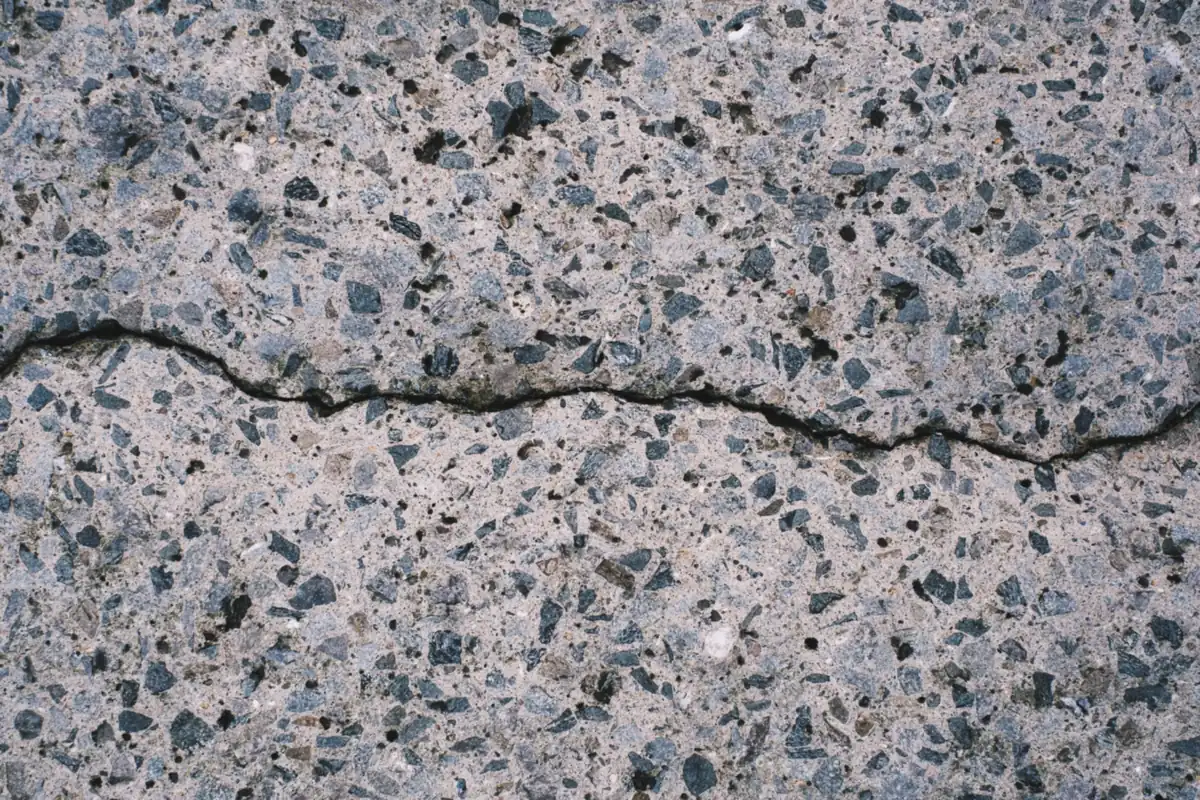
Concrete Repair Companies in Pflugerville, TX
Cracks, spalls, open joints, trip lips and settled panels. We find what moved the concrete first, then fix what it broke, and say when a repair won’t outlast a replacement.
Stock photo
Book a Concrete Repair Site Visit
Request a Concrete Site Visit
Tell us what you want built or fixed and roughly where. We reply to set a time to walk the site. Rather talk? Call (737) 201-0849.
Send photos of the damage and, if you can, one of the downspout or the nearest corner of the house. Many concrete problems start a few feet from where the crack shows.
- We sound the slab with a chain and map the hollow areas.
- We look for the cause: water, clay, roots or missing joints.
- You get a repair, replace or leave-it answer in writing.
How Concrete Repair Contractors Find a Hollow Slab
Some damage is easy to see. Delamination usually isn’t: the top layer lets go of the concrete under it and looks fine until it breaks out. A chain finds it first.
Hollow Sounder: find the loose corner
Drag across the squares, tap them, or use “Drag the chain one row”. Listen for where the ring turns into a thud.
0 of 50 spots sounded. Corners and edges are where to listen hardest.
In this sample, two corners near the slab edges sound hollow, the kind of delamination that shows up where water sits or a joint was cut late.
What it means: Hollow edges like these are saw-cut back to concrete that rings sound and repaired full depth, or the panel is replaced joint to joint. A surface patch over them would break out with the loose layer.
Why Pflugerville Concrete Settles Next to a Downspout
A roof sends a lot of water to one corner of the house. Where it lands decides whether the walk or patio there stays put.
Rain Test: where the downspout drops its water
Pick a downspout setup, then press Make it rain.
Dumps at the slab edge: Water pours straight onto the clay at the edge of the walk and soaks under it. Clay that is wet one week and dry the next swells and shrinks under that corner, and the panel cracks or drops there first.
- Dumps at the slab edge: Water pours straight onto the clay at the edge of the walk and soaks under it. Clay that is wet one week and dry the next swells and shrinks under that corner, and the panel cracks or drops there first.
- Splash block only: Better, but the water still lands close to the house and the slab, especially in a heavy storm, when it overruns the splash block.
- Extended past the slab: The water leaves the downspout through an extension or a buried line and comes out past the concrete, where the yard slopes away. Drainage that moves water away from the house is the first fix for clay movement at the foundation, and it protects the flatwork too.
Background: Dallas County Master Gardeners, citing Texas A&M AgriLife’s Earth-Kind guidance, list drainage that slopes away from the house, gutters and sometimes underground drainage as the basics for homes on expansive clay.
Concrete Repair Services Near Me: Cracks, Spalls, Joints and Settled Panels
What we repair, and what each repair actually involves.
Hairline and Shrinkage Cracks
Short, shallow, roughly parallel cracks from a hot, windy pour day (plastic shrinkage) rarely affect strength (NRMCA). If they are stable, they are cleaned and sealed so water stays out.
Cracks That Keep Moving
A crack that widens or steps up and down is the clay or water talking. The cause gets fixed first: drainage, a root, or a missing joint.
Spalls and Broken Edges
Chipped edges and spalled patches are saw-cut back to sound concrete and repaired, so the patch has a clean edge to bond to.
Open or Failed Joints
Joints that have lost their sealant, or were never sealed, are cleaned out and resealed with a flexible joint sealant.
Settled or Lifted Panels
A panel that has dropped or heaved is cut out joint to joint, the base under it corrected, and a new panel poured and doweled in.
Trip Lips on Walks
A step between two sidewalk panels is a hazard and, on a public walk, the owner’s responsibility. The raised or sunken panel is replaced.
Random Cracks Where a Joint Should Be
A slab with joints too far apart, cut too shallow or sawn too late picks its own crack lines. A stable crack is routed and sealed like a joint; the next pour gets joints on a plan.
Pop-Outs
Small cone-shaped pits where a porous stone near the surface broke out. NRMCA ties most of them to freezing water, so they are uncommon here, and they are cosmetic. A cluster can be patched; a slab full of them is a resurfacing question.
Faded or Patchy Stamped Color
Chalky, uneven color on decorative concrete is usually a worn sealer in full sun, not failed concrete. It is cleaned and resealed, and any faded color is refreshed first.
What Concrete Repair Specialists Fix and What They Replace
A repair makes sense when most of the slab is sound and the damage has a cause you can stop. One cracked panel next to a downspout, a spalled corner, a few open joints: those are repairs.
Replacement makes more sense when the slab sounds hollow across large areas, has cracked through in several places, or keeps moving because of what is underneath. Patching that slab every spring costs more over a few years than replacing it once. Sometimes the middle path is best: replace the bad panels, then put a resurfacing overlay over the whole slab so old and new match.
Whichever way it goes, you get the answer in writing, with the reason. That is the standard we hold ourselves to as a concrete contractor in Pflugerville.
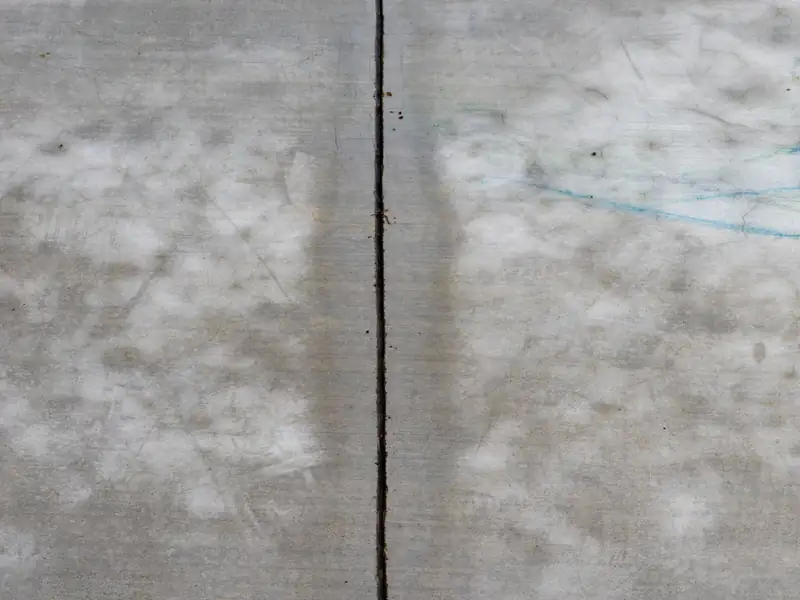
Tamp: what goes back under a replaced panel
When a settled panel comes out, the hole under it is usually soft or washed out. Pick how it gets refilled, run four passes, then pour and load the new panel.
Choose how the fill goes in, then run the compactor.
- Thin lifts: Refilled and compacted in lifts, the hole is firm again from the bottom up, and the new panel sits flush with the old ones beside it. Fix the water that caused it (a downspout, a low spot) and the repair stays a repair.
- One deep dump: Refilled in one go and tamped on top, the hole is firm only near the surface. The new panel settles the same way the old one did, and the repair is back on the list next spring.
Drawing not to scale; the sag is exaggerated so you can see it.
Concrete Repair Companies Near Me: When the City Sends a Sidewalk Notice
Pflugerville puts the duty to repair a defective sidewalk, driveway apron, curb or gutter on the owner of the property next to it (City Code §130.13). The city engineer can send written notice, and the owner then has 30 days to make the repair. Because those pieces sit in the right-of-way, the repair may also need a right-of-way permit from Development Engineering, and the sidewalk joints have to follow the city’s doweling rule.
If you have a notice, send a photo of it with your visit request so we can plan around the date. The sidewalk page covers the city’s sidewalk standards in detail.
Concrete Repair Cost: Patch, Panel or Replace
Sealing cracks and joints is the least expensive repair and buys real years when the slab is sound. Cutting out and replacing a panel costs more, mostly in saw-cutting, breaking out, base correction and the new pour, but it fixes the problem rather than covering it. Replacing a whole slab is the most expensive and the only fix when the slab itself has failed.
Drainage fixes, like extending a downspout or regrading a bed, are often the cheapest part and the one that keeps the repair from being needed again.
Concrete Repair Questions From Pflugerville Owners
Usually one of three things: the surface dried too fast on a hot, windy pour day (short, parallel plastic-shrinkage cracks), the clay under it moved (longer cracks and lifted or dropped panels), or the joints were too far apart for the slab to crack where it was told. Each one has a different repair, which is why we look before we patch.
Not by itself. A patio is a separate slab that moves on its own clay. If you also see cracks in interior drywall, doors that stick, or gaps where the patio meets the house widening over time, have a foundation repair specialist or engineer look at the house. We fix the flatwork, not the house foundation.
Yes, once the crack is stable. A flexible sealant keeps rain from running down through the slab into the base, which on clay means less swelling and settling under that spot. Sealing a crack that is still moving is a maintenance item, not a fix.
Rarely exactly. Old concrete has years of sun and dirt on it, and new concrete starts lighter. Replacing a whole panel from joint to joint looks more intentional than a patch in the middle, and resurfacing the area afterward evens the color if matching matters.
No. Lifting a settled panel with injected foam or slurry is its own specialty. When a panel has dropped, we cut it out, correct the base and pour it again; if lifting would serve you better, we will say so and you can call a lifting company.
Only after the hollow part is removed. A delaminated layer sounds dull because it has let go of the concrete below; patching over it just adds weight to something already loose. The area is saw-cut back to concrete that rings sound, then repaired full depth.
Concrete Work When a Repair Isn’t Enough
Ready to Find Out What Moved Your Concrete?
Send photos of the damage and the nearest downspout. We’ll sound the slab and tell you repair, replace, or leave it.
(737) 201-0849 Book a Repair Visit